
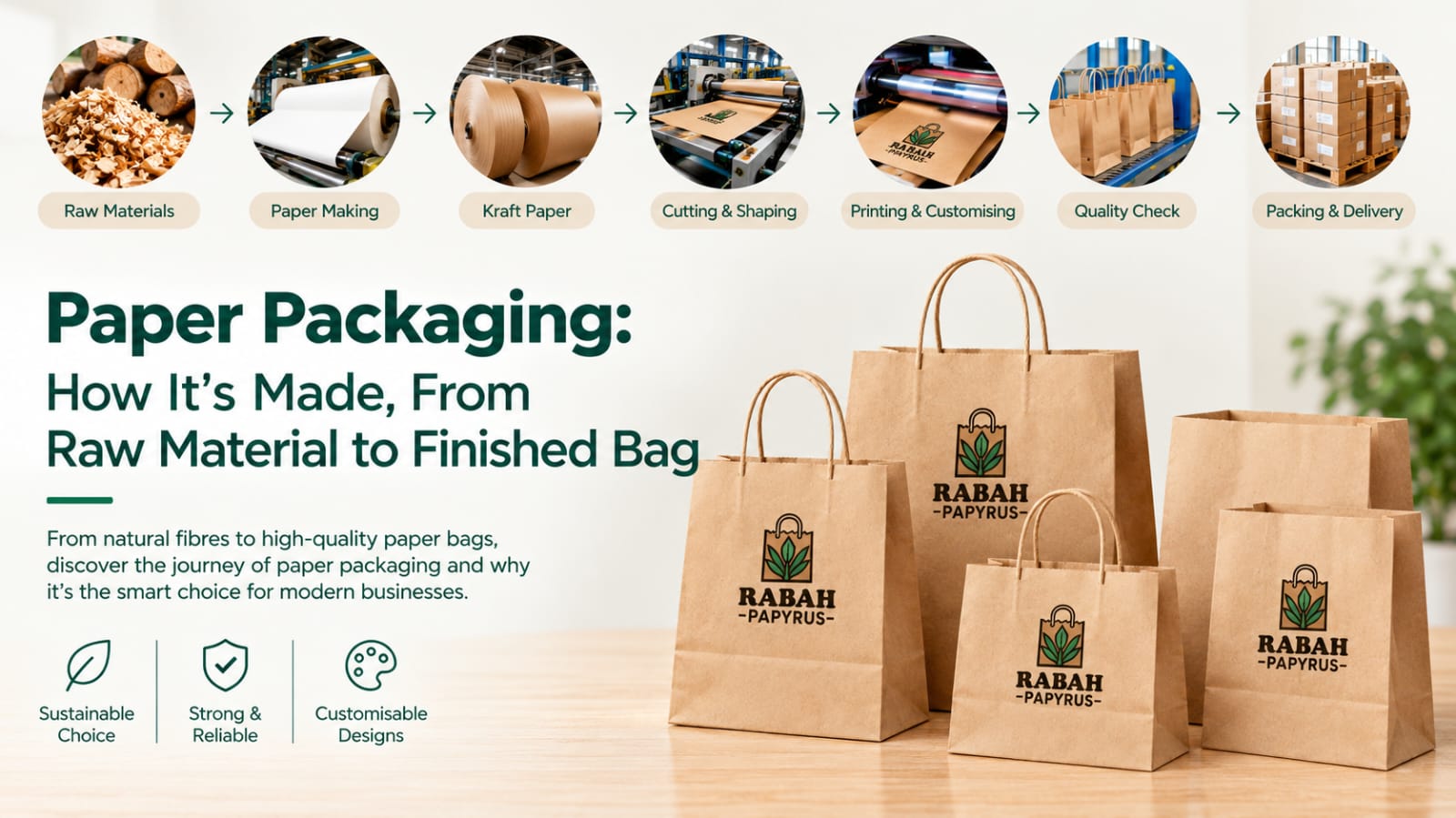
Have you ever wondered how a simple sheet of paper becomes a shopping bag that carries products and showcases a brand? The process involves several important steps, from selecting raw materials to shaping, printing, and checking the finished bag.
Retail stores, clothing brands, bakeries, restaurants, and many other businesses widely use paper packaging. It offers a practical way to carry products while helping businesses present their brands professionally.
We will explore how paper packaging is made, why kraft paper is popular, and what businesses should consider when choosing paper bags for their needs.
Step 1: Selecting the Right Raw Materials
Every quality paper bag starts with suitable raw materials. The fibres used in papermaking influence the finished paper’s strength, texture, and appearance.
Virgin paper fibres
Virgin fibres come mainly from wood and are processed to separate the fibres needed to make paper. Depending on the grade, they can provide consistent strength and surface quality for different packaging applications.
Recycled paper fibres
Recycled fibres come from recovered paper that is collected, sorted, and processed into pulp. Using recycled material helps reuse existing resources, although the quality of the finished paper depends on the recovered material and manufacturing process.
Choosing the right paper
Manufacturers consider several factors before selecting paper:
- Paper weight: Measured in GSM (grams per square metre), it indicates the mass of the paper per unit area.
- Strength: The paper must suit the weight and type of products being carried.
- Appearance: Colour and texture influence the bag’s overall look.
- Printability: The paper should suit the intended logo and artwork.
- Design: Bag dimensions, handles, and bottom construction affect performance.
The aim is to balance strength, appearance, functionality, and cost rather than simply choosing the thickest paper.
Step 2: Turning raw materials into paper
Once the raw materials are selected, they are processed into paper through several stages.
- Pulping: Raw materials are processed into pulp, a mixture of fibres and water. Wood and recycled paper require different processing methods.
- Cleaning and refining: The pulp is cleaned to remove unwanted materials and prepared so the fibres can bond effectively.
- Forming the sheet: The pulp spreads over a moving screen, allowing water to drain and the fibres to form a continuous sheet.
- Pressing and drying: Additional water is removed, and the sheet develops the properties required for the finished paper.
- Reeling or cutting: The paper is wound into large rolls or cut into sheets for further processing.
The paper is now ready to be converted into bags and other packaging products.
Step 3: Why Kraft Paper Is the Popular Choice for Paper Bags.
Kraft paper is one of the most widely recognised materials used for paper bags. It is produced using the kraft pulping process, which separates wood fibres to make paper suitable for packaging.
Although brown kraft paper is particularly popular, it is also available in other colours and finishes.
Why are kraft paper bags popular?
Strength: Suitable kraft paper grades can provide the strength required for many everyday carrying needs.
Versatility: Kraft paper can be converted into bags in various sizes and styles for use across industries.
Natural appearance: Its familiar brown colour suits brands that prefer a simple, understated design.
Printing options: Depending on the paper grade and surface, businesses can add logos, brand names, colours, and artwork.
Wide applications: Retail stores, grocery shops, bakeries, and gift shops use kraft paper bags for different purposes.
However, not all kraft paper bags perform equally. Paper weight, bag dimensions, handle attachment, and bottom construction all affect strength. Businesses should choose a suitable grade based on how the bag will be used.
Step 4: Cutting and Shaping Paper Bags
After the paper is prepared, it moves to the bag-making stage. Manufacturers use converting machines and other equipment to cut, fold, and shape the paper according to the required dimensions.
Folding the paper
The paper is folded to form the main body of the bag. Side folds, known as gussets, allow the bag to expand and create additional space when opened.
Forming the bottom
The bottom is folded and secured with a suitable adhesive (water-based or hot-melt glue) or in accordance with the specified construction method. Because this area supports the contents, proper alignment and secure bonding are important.
Adding handles
Depending on the design, bags may feature twisted paper handles, flat paper handles, or no handles. The handle style and attachment should suit the bag’s size and intended load.
These manufacturing details help determine how well the finished bag performs during everyday use.
Step 5: Printing and Customising Paper Bags
Paper bags can do more than carry products. They can also help customers recognise a business and its brand.
Printing allows businesses to add logos, brand names, colours, and other artwork to their packaging.
Choosing the right design
A good design communicates the brand clearly without making the bag look crowded. A clothing brand may prefer a clean, minimal design, while a bakery might choose colourful artwork.
The design should remain clear and readable once the bag is folded and assembled.
Printing methods
The suitable printing method depends on the order quantity, paper type, artwork, colour requirements, and budget. Flexographic printing is commonly used for packaging materials, while other methods may suit particular designs.
Before printing begins, manufacturers position the artwork carefully to ensure that logos and other elements appear in the correct places.
Why choose customised paper bags?
Customised paper bags help businesses maintain a consistent brand image. A clearly printed logo and suitable colours can make packaging more recognisable when customers carry it beyond the store.
Step 6: Checking the Quality of Finished Bags
Before delivery, paper bags should be inspected to ensure they meet the required specifications.
Common quality checks include:
- Size and dimensions: Confirming that bags match the specified measurements.
- Paper quality: Checking consistency and visible defects.
- Adhesion: Ensuring that the bottom and side seams are properly secured.
- Handle strength: Checking that handles and attachment points are suitable for the intended use.
- Printing quality: Inspecting logos, colours, and artwork placement.
- Overall appearance: Identifying significant tears, stains, or damaged edges.
A bag that looks attractive but fails during use can affect customer satisfaction. Consistent quality checks help businesses receive packaging that meets their expectations.
Step 7: Packing and Delivering Finished Bags
After inspection, approved bags are counted, bundled, and packed for transportation. Suitable packing helps protect them from dust, moisture, and damage during storage and delivery.
Businesses ordering paper bags wholesale should consider production timelines, delivery arrangements, order quantities, and available storage space.
Once delivered, bags should be stored in a clean, dry place to help maintain their shape and quality.
Choosing Paper Packaging With Rabah Papyrus
Choosing the right paper packaging begins with understanding your products, brand, and daily business requirements.
Rabah Papyrus offers paper packaging options for businesses looking to match their bags to their products and brand identity.
Before selecting a bag, consider the product size, expected carrying weight, preferred design, and printing requirements. Reviewing samples and discussing your specifications with the supplier can help you make an informed decision before placing a bulk order.
Frequently Asked Questions
What is paper packaging made from?
Paper packaging is generally made from virgin wood fibres, recycled paper fibres, or a combination of both. The fibres are processed into pulp, formed into sheets, dried, and converted into products such as bags and boxes.
What is kraft paper, and why is it used for bags?
Kraft paper is produced using the kraft pulping process. It is popular for bags because suitable grades offer strength, a natural appearance, and printing options.
Are paper bags recyclable?
Many paper bags are recyclable, depending on local facilities and the bag’s condition. Coatings, laminations, adhesives, and contamination may affect acceptance.
Can paper bags be customised with a logo?
Yes. Paper bags can often be printed with logos, brand names, colours, and other artwork. Options depend on the paper type, printing method, and order requirements.
What should businesses check before buying paper bags in bulk?
Businesses should check paper quality, bag dimensions, handles, bottom construction, printing requirements, minimum order quantity, delivery timelines, and supplier reliability. Reviewing samples before ordering is recommended.
Conclusion
Paper packaging goes through several carefully planned stages, from selecting raw materials and making paper to cutting, folding, printing, and quality checking. Each stage contributes to the strength, appearance, and usability of the finished bag.
Whether you need kraft paper bags for everyday retail use or customised paper bags to represent your brand, choosing the right specifications is essential.
By understanding the manufacturing process and evaluating your business requirements, you can select paper packaging that balances functionality, quality, and professional presentation.
Contact Rabah Papyrus to discuss your packaging requirements and explore the available options.
Contact: 7989098789
Website: www.rabahpapyrus.com
Location: Plot No. 164, MSME- Gurrapalem,
Pendurthi, Visakhapatnam.